

 English
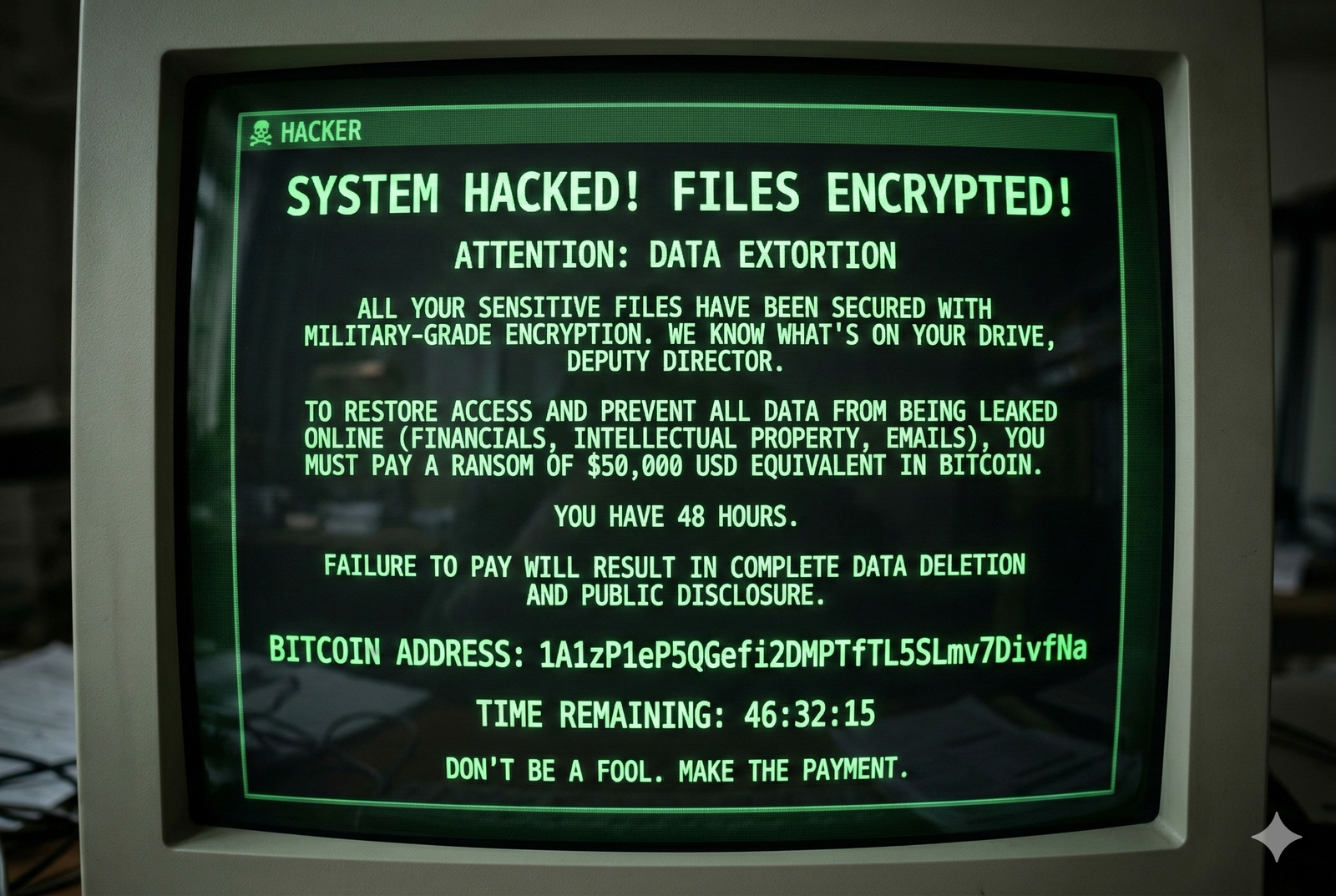
Data Breach Resolve
The Extortion Illusion: Neutralizing Fabricated Data Breaches Through Forensic Governance
The moment a cybercriminal claims to have breached your database, the burden of proof immediately shifts to your boardroom. For a multinational enterprise, an unverified claim on an underground forum is not just an IT incident; it is an immediate, high-stakes legal crisis that triggers intense media scrutiny and aggressive government investigations.
The hidden risk in this scenario is the corporate reflex to treat every extortion attempt as a genuine technical failure. Reacting with generic public relations statements or prematurely bracing for liability guarantees reputational damage and plummets shareholder trust. The strategic pivot requires treating the claim as a hostile legal event. Executive leadership must immediately deploy forensic validation to separate fact from fabrication, neutralizing the regulatory threat before authorities mandate catastrophic operational freezes.
The Challenge: The "Panic Reflex" Blind Spot
We recently directed the crisis response for one of the largest telecommunications conglomerates in the Asia-Pacific region, an entity serving over 150 million active customers. A notorious hacker group publicly claimed to possess the company`s entire customer database, offering it for sale on a high-profile dark-web forum. This claim triggered an immediate, high-priority investigation by national data protection authorities.
The blind spot for most executives in this scenario is the "Panic Reflex." When presented with a leaked sample, executives often assume the data is authentic simply because the customer names are real. However, under strict modern data protection mandates, assuming a breach without empirical proof invites devastating regulatory fines. The challenge was not to plug a nonexistent leak, but to scientifically prove the leak never occurred, doing so under the intense glare of the national media.
Our Intervention: The Forensic Counter-Extortion Protocol
To dismantle the hacker`s claims and satisfy the regulators, we bypassed traditional crisis communications and implemented our Forensic Counter-Extortion Protocol. We executed this through three strict tactical phases:
1. Dark-Web Acquisition and Structural Dissection We secured a primary data sample directly from the underground forum. Our analysts cross-referenced the hacker’s dataset against the telecommunications provider`s actual data architecture. We identified critical structural mismatches immediately. While the customer names were real, they were paired with incorrect identification numbers and outdated addresses. The threat was a "Frankenstein" dataset—stitched together from older, unrelated third-party leaks to simulate a new, massive breach.
2. Pre-Incident Control Validation Defending against a fabrication requires proving your walls were never breached in the first place. We conducted a rapid, surgical audit to validate the client`s existing privacy and security controls. We documented that enterprise-grade encryption, perimeter defenses, and access logging were fully operational and completely uncompromised well before the extortion attempt took place.
3. Proactive Regulatory Diplomacy We preempted escalating regulatory action by presenting our forensic analysis directly to the national ombudsman and relevant government agencies. Instead of delivering a defensive corporate denial, we delivered a mathematical proof of data fabrication. We controlled the narrative by providing the regulators with the exact technical evidence they needed to close their files.
The Outcome: Business Impact and Resolution
By replacing panic with forensic governance, we transformed a reputational disaster into a validation of the company`s security posture.
✅ Zero Breach Liability: The government formally closed the case as “data fabrication,” completely eliminating the threat of regulatory penalties.
✅ Reputational De-escalation: Public and media scrutiny evaporated immediately once the ombudsman validated our findings, preserving the brand equity tied to 150 million subscribers.
✅ Operational Continuity: The telecommunications provider maintained uninterrupted business operations throughout the crisis, avoiding the costly downtime associated with system-wide security freezes.
The Tactical Takeaway for the C-Suite
When a hacker claims to have your data, your technical response dictates your legal reality. You must be prepared to prove a negative.
To ensure your organization is prepared to neutralize a fabricated extortion attempt, implement this 3-Point "Non-Breach" Board Audit today:
The Acquisition Mandate: Do you have a rapid-response vendor authorized to immediately secure and download data samples from dark-web forums for internal analysis?
The Cryptographic Proof: Can your Chief Information Security Officer (CISO) cryptographically prove within 24 hours that your data architecture differs from a stitched, fabricated dataset?
Immutable Logging: Are your pre-incident access logs immutable, isolated, and ready for immediate presentation to a national ombudsman to prove your perimeter holds?
If the answer to any of these is "no," your organization is currently relying on hope rather than governance.